

Dressing well at a corporate job is not about looking flashy or copying whatever trend is popular this month. It is about communicating reliability, good judgment, and respect for the workplace. In many offices, your clothing is part of your professional reputation long before people learn your strengths, your work ethic, or your results. The right wardrobe choices can help you feel confident, move comfortably through long days, and show up appropriately for meetings, presentations, and client interactions.
This guide breaks corporate dressing down into simple, repeatable rules. A large closet is not necessary. You need a small set of items that fit correctly, work together, and match the formality level of your office.

Know the dress code
Before you buy anything, understand what “corporate” means in your specific environment. Some companies still expect suits most days. Others are business professionals only for client meetings. Some are business casual with occasional formal days. Spend a week observing what managers and high performers wear, especially in your department. Also,o pay attention to what people wear when leadership is present.
Dress a little more formally than normal when in doubt. It is easier to relax your look later than it is to recover from repeatedly appearing underdressed. Keep a simple mental scale: client-facing roles lean more formal, internal roles lean slightly less formal, and seniority usually increases expectations around polish.
Start with fit
Fit is the foundation of looking sharp, even if your clothes are affordable. A well-fitted shirt and trousers will beat expensive pieces that look baggy or tight. Focus on the shoulders of your shirt and jacket, because those are hard to tailor. Your shirt collar should sit cleanly around the neck without pinching, and the sleeves should end near the wrist bone. Trousers should sit comfortably at the waist without requiring a belt to hold them up.
Build a relationship with a tailor if you can. Simple alterations like hemming trousers, tapering a leg slightly, or taking in a shirt can transform your whole look. The goal is to look clean and intentional, not squeezed or sloppy.
Build a core wardrobe.
Think in terms of a uniform you can repeat with small variations. Start with two or three dress shirts in white and light blue, plus one subtle pattern like a fine stripe. Add one navy blazer or a charcoal suit, depending on your office formality. For trousers, choose neutral colors that mix easily with your shirts and jackets. In the middle of your rotation, include men’s formal trousers in charcoal or navy to anchor outfits that need to read professional without looking like you are trying too hard.
Avoid loud colors and bold prints at first. Corporate style rewards consistency. Once you have the basics covered, you can add personality through textures, seasonal fabrics, or a tie with understated character.
Choose smart colors
Corporate dressing works best with a controlled color palette. Neutrals like navy, charcoal, mid-gray, and white are safe because they look professional in almost any setting and match easily. Brown and tan can work well, especially in shoes and belts, but keep the tones consistent.
If you want variety, use soft, office-friendly shades such as light blue, pale pink, or muted olive. Keep contrast balanced. For example, a light shirt with dark trousers and dark shoes is a classic formula. If your outfit has multiple dark pieces, ensure at least one element adds lightness, usually the shirt.
Shoes and belt basics
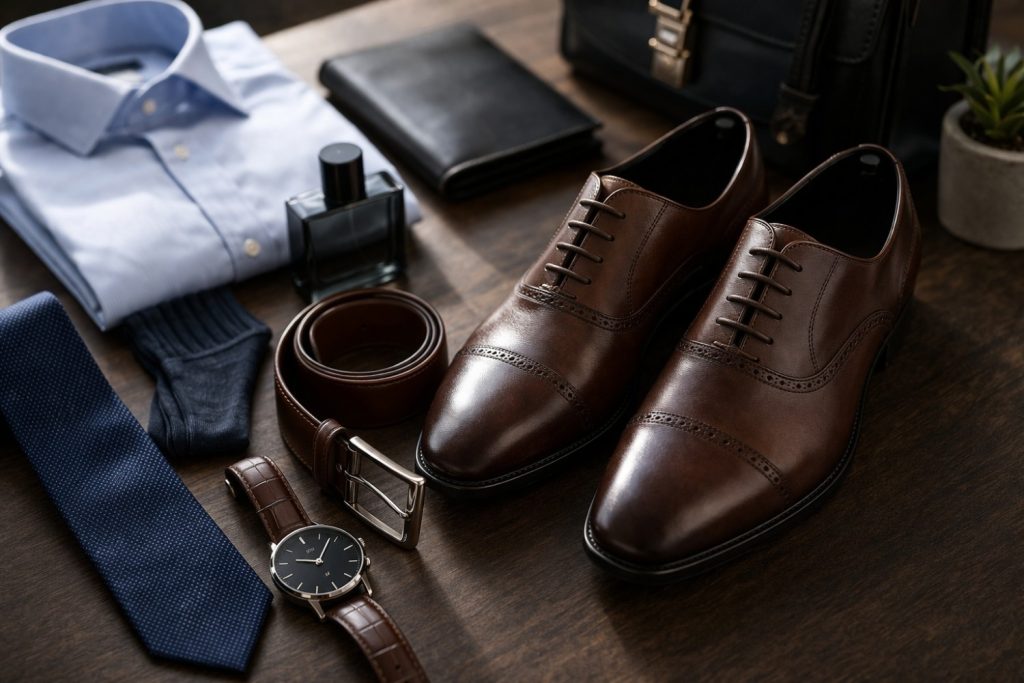
Shoes are one of the quickest ways people judge how put-together you are. For corporate offices, start with a black pair and a brown pair. Oxfords are the most formal and are ideal for business professional environments. Derbies are slightly less formal but still office-appropriate and often more comfortable.
Try to match your shoes and belt as closely as you can. Keep buckles simple. Also, maintain your shoes. Clean them regularly, condition the leather, and replace worn laces. A polished shoe lifts the entire outfit, even if the rest is simple.
Seasonal dressing
Corporate dressing should adapt to the weather without compromising professionalism. In warmer months, choose breathable fabrics like cotton, tropical wool, or linen blends that resist wrinkles better than pure linen. Short sleeves are often too casual for many corporate settings, so opt for lightweight long-sleeve shirts instead.
In colder months, layering is your friend. A fine-gauge sweater over a collared shirt looks sharp and stays comfortable. Add a tailored overcoat for commuting and client visits. Keep outerwear clean and structured, because it is the first thing people see when you arrive.
Details that matter
Small details separate a guy who is “wearing office clothes” from a guy who looks professionally styled. Iron or steam your shirts. Keep collars crisp and avoid shirts that balloon around the waist. Choose dark, conservative socks, ideally matching your trousers. If you wear a tie, keep the width moderate and the pattern subtle.
Grooming is part of dressing right. Maintain neat hair, clean nails, and a light fragrance. The setting should also be reflected in your luggage. A structured backpack, briefcase, or leather tote in black or brown looks more corporate than a casual gym bag.
You can also visit this site to read more articles like this.
Conclusion
Dressing right at a corporate job is about fit, consistency, and a few dependable pieces you can rely on. Learn your office’s expectations, invest in tailoring where it makes the biggest difference, and build a wardrobe around neutral colors and classic shapes. Prioritize shoes, keep details tidy, and adapt with smart seasonal fabrics.
When you treat your clothing as a professional tool, you reduce daily decision fatigue and increase confidence. Over time, people will associate your appearance with the same qualities you want attached to your work: dependable, prepared, and ready to lead.


Leave a Reply